We Voted to Save Democracy. Now Do Your F#%kin' Job.

"A party that demands our votes ought to know what to do with its own."
by Ken Oswald "__yak" Vann, Jr.
WEDNESDAY 11 November 2026
I’m tired of being told democracy is on the ballot by people who cannot reliably put themselves on the roll call.

Ordinary voters are expected to arrange childcare, miss work, navigate restrictions, and treat every election like the last helicopter out. Then the officials entrusted with government’s actual levers miss a consequential vote, and suddenly everybody discovers the importance of understanding individual circumstances.
Fine. Let’s understand them. Then let’s assign responsibility.
On November 10, the House voted 211–204 to refer eight impeachment articles against Defense Secretary Pete Hegseth to the Judiciary Committee, effectively shelving the effort. Eleven Democrats did not vote. Every Democrat who voted opposed referral. Eight additional opposition votes would have produced a tie and defeated the motion. That would have preserved a path to an impeachment vote, without guaranteeing impeachment or removal.
The absent Democrats were Julia Brownley, Lou Correa, Laura Gillen, Steven Horsford, Jonathan Jackson, Nancy Pelosi, Brittany Pettersen, Melanie Stansbury, Haley Stevens, Marilyn Strickland, and Frederica Wilson. Their names belong in this account. So do the differences between their circumstances.
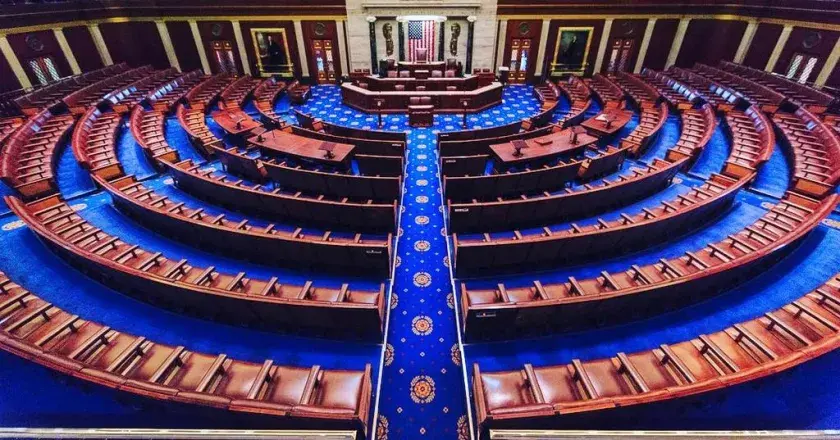
Representative Thomas Massie, a Kentucky Republican, introduced articles alleging unauthorized warfare in Iran, extrajudicial killings, and other abuses. Hegseth defended his orders as lawful. Tuesday’s procedural maneuver adjudicated none of those accusations. Trump nevertheless celebrated an “exoneration.” His allies delivered a delay, and he sold it as innocence.
Procedure distributes power. Sending articles to committee sounds responsible: more review, more deliberation. Here, it removed an immediate confrontation from the floor and placed the resolution with a Republican-led committee as the congressional term neared its end. Republicans drove the maneuver. Democratic absences helped it succeed.
There is also a financial connection that deserves examination. Citing Axios reporter Andrew Solender, The New Republic reported that some absent members were returning from a reception hosted by Elect Democratic Women. Eight of the eleven had received support from that organization or its action fund. Separately, The Lever’s review of federal filings found that AIPAC’s super PAC, United Democracy Project, contributed approximately $2.4 million to EDW Action Fund during the 2026 cycle.
That establishes a funding relationship and reported overlap between the event and the absences. The reporting does not identify every attendee or demonstrate that AIPAC caused anyone to miss the vote. The connection warrants questions; it does not supply the answers.
Now the objection: people get sick. Emergencies happen. Traffic can trap somebody who intends to vote. Correct. Correa cited a medical procedure; Horsford’s office cited a personal emergency. Stansbury and others reported traffic interference. Brownley accused Speaker Mike Johnson of closing the vote before they arrived. Those explanations require individual evaluation.
A medical absence is not evidence of betrayal. Neither, by itself, is getting caught behind a police escort. Pelosi’s spokesperson, however, said she returned to San Francisco for a veterans event. A worthwhile event still raises a question about priorities when a consequential vote is taking place in Washington.

And Hakeem Jeffries and Democratic whip Katherine Clark owe voters an account of their preparations. Who confirmed attendance? Who knew members were away? What contingency existed? If Johnson exploited the voting window, establish the timeline. Condemning Republican tactics does not settle whether Democratic coordination failed.
A family reunion committee with a clipboard can manage a head count. The people asking to supervise the Pentagon ought to clear that bar.
The failure is serious enough without inventing eleven identical motives. Voters supplied electoral authority. At a moment when attendance could have preserved an accountability effort, the caucus failed to deliver the votes. Responsibility belongs wherever the evidence places it.
Democrats should recognize the incentive this creates: party loyalty becomes a demand made of voters, while an officeholder’s failures disappear beneath the next Republican outrage. If dependable support survives avoidable failure without consequences, what requires the officeholder to change?
Democratic members and local party organizations should demand public explanations and examine the scheduling, event attendance, funding relationships, and voting timeline. Where neglect is established, withdraw endorsements and recruit primary challengers. Scrutinize leadership’s coordination, too. A legitimate emergency deserves understanding. A preventable failure deserves consequences.
Because the service member receiving an order, the civilian beneath a flight path, and the constituent demanding lawful government cannot collect protection from a statement filed after the gavel.
Let this be the last betrayal Democrats absorb as the price of belonging. Excuse a real emergency. Investigate an obstruction. Replace an official who treated the obligation as optional.
The seat belongs to the people. Stop renewing the lease on an apology.


Comments