Three Years Later After The Folding Chair: The Montgomery Riverfront Brawl and Where Everybody is Now
- __yak
- Aug 6
- 4 min read
"The internet immortalized the folding chair. Three years later, here’s what became of the people who actually fought, swam, worked—and got charged."
by Ken Oswald "__yak" Vann, Jr.
THURSDAY 06 August 2026

Three years later, the folding chair has a more complete public biography than most of the people who were actually on that dock.
We remember August 5, 2023, correctly: Harriott II co-captain Dameion Pickett moved a pontoon boat that had blocked the city riverboat’s docking space for roughly 45 minutes, and white boaters responded by attacking a Black man who was performing his job. Then Montgomery answered. Crew members rushed ashore. A teenager entered the Alabama River like swimming had suddenly become a community-defense elective. Reggie Ray appeared with a white folding chair and introduced it to Black political iconography.
The internet named heroes, printed shirts and made the chair more famous than half the United States Senate. But a “where are they now?” story requires us to look past the meme and find the people.
Dameion Pickett
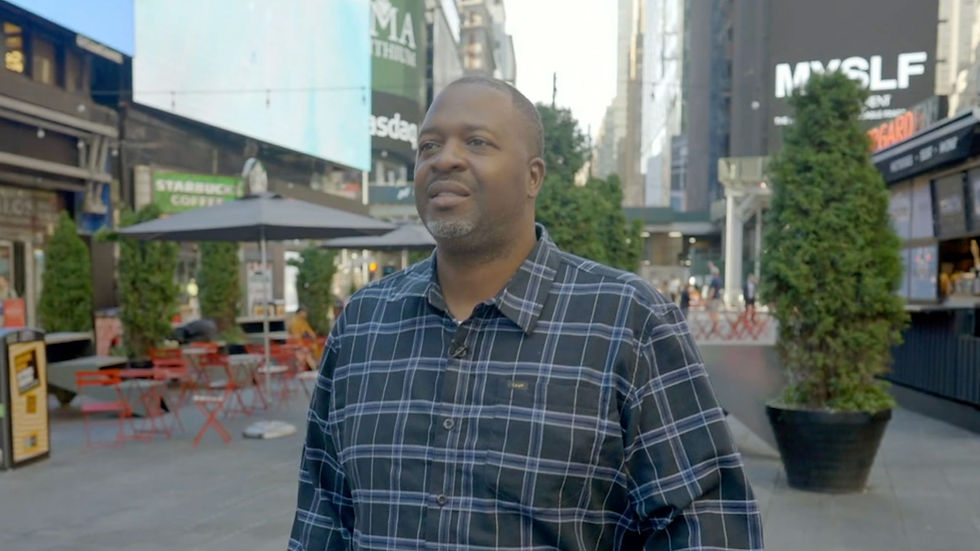
Pickett, the man at the center of it all, returned to work after taking only four days off. In November 2023, he said the experience still disgusted him and objected to retailers selling merchandise bearing his image without compensating him. He had worked aboard the Harriott II for 11 years by then. A third-degree assault complaint filed against him was dismissed in December 2023.
The Harriott II is still promoted and staffed by the City of Montgomery in 2026, but I found no reliable current report confirming whether Pickett remains aboard it. The boat stayed visible. The worker disappeared from the coverage.
Aaren Hamilton-Rudolph

Aaren was 16 and reportedly in only his second week on the job when he swam toward the dock because, as he later explained, everybody was recording and nobody was helping. He would be about 19 now.
Public reporting on his life after the television interviews is thin. One intriguing March 2026 federal trademark application, filed under the full name Aaren Elijah Hamilton Rudolph in Montgomery, seeks protection for “ESM” in food vending, kiosks, catering and restaurant services. It appears likely to belong to the same young man, although I could not independently confirm that connection. Black Aquaman may be becoming Black Entrepreneur, which feels like the sequel he deserved.
RahRah and the other young deckhand

Roshein “RahRah” Carlton, Pickett’s coworker and friend, also rushed to help. He later described intervention as a duty to his team and said racial slurs were used during the confrontation. After the national interviews, reliable public reporting largely stopped following him.
The same is true of Daniel Warren, the teenage deckhand who accompanied Pickett ashore and was also struck. He became essential to the story and then inconvenient to the archive.
Reggie Ray

Ray pleaded guilty to disorderly conduct in December 2023. He received a 90-day suspended jail term, 50 hours of community service and $357 in court costs. A fundraiser associated with his legal defense reportedly exceeded $275,000 after his arrest, but later public reporting offers little detail about Ray’s life, the money or what happened after the courthouse cameras left.
America made the chair merchandise.
Ray got a sentence.
The Pontoon Boaters

Richard Roberts pleaded guilty to two misdemeanor assault charges. He was ordered to serve 32 days in jail on weekends, complete 100 hours of community service and pay court costs.
Mary Todd pleaded guilty to harassment and received a suspended sentence, anger-management requirements and court costs.
Allen Todd and Zachary Shipman also pleaded guilty to harassment. Each received a suspended 60-day sentence, 12 months of probation, 100 hours of community service, anger management and fines. Those probationary periods should have expired in 2024 if completed without violations, and I found no reliable later reporting of additional court action connected to the brawl.
So where are they now?
Mostly outside the frame.
That is the less entertaining answer and the more important one. Black America celebrated Montgomery because people exhausted by white entitlement watched a Black worker refuse humiliation—and watched other Black people refuse to leave him alone inside it.
But our attention still behaved like an extraction industry. We took the hat toss, the swim, the punches and the chair. We converted terror into jokes, people into characters and a worker’s worst day into intellectual property he did not own.

I still celebrate them. Pickett. Aaren. RahRah. Ray. Every unnamed Black auntie, uncle, crew member and passenger who saw a four-on-one attack developing and decided spectatorship was insufficient.
But three years later, put the chair down long enough to remember who carried it, who swam, who got jumped, who went back to work—and who caused the whole damn thing, completed some classes and probation, then quietly returned to the privilege of being ordinary.


Comments