A False Accusation, A 130-Yard Chase, A Dead Child—And Nobody's Responsible?
- reignitedtheseries
- Jun 3
- 4 min read

And there it is.
"Not guilty".

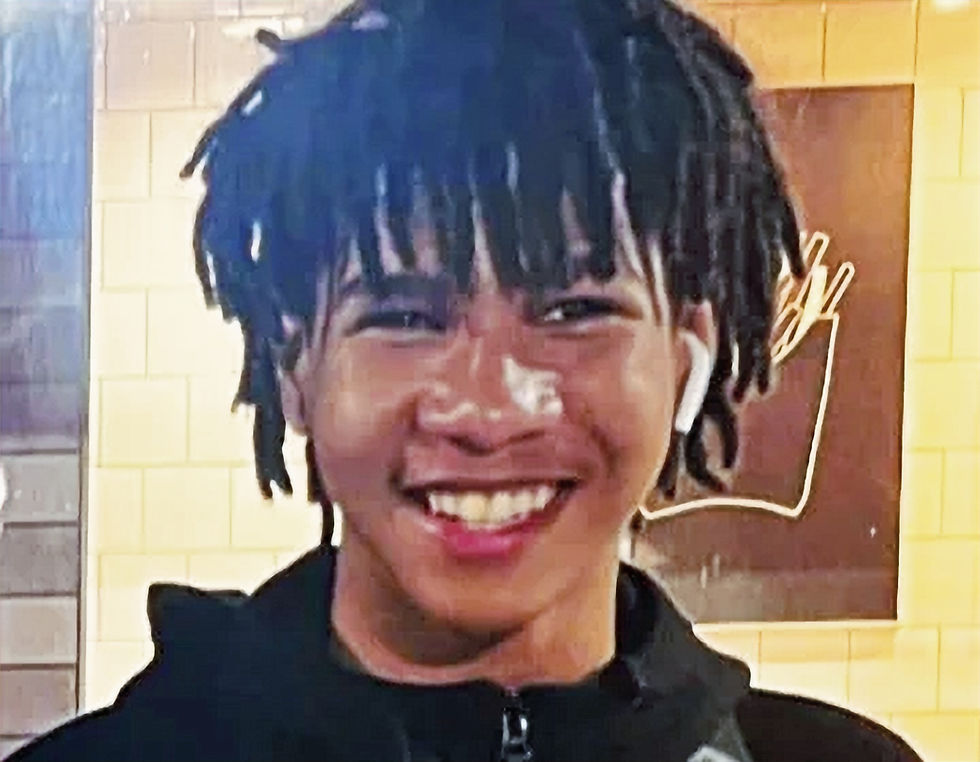
After nearly three years, a week-long trial, hours of jury deliberation, and a mountain of testimony, Rick Chow walks out of a South Carolina courtroom cleared of murder charges in the shooting death of 14-year-old Cyrus Carmack-Belton. The verdict landed exactly where a lot of people feared it would. Not because the facts were unclear. Not because there wasn't evidence. Because once this case became a debate over whose fear mattered most, I had a feeling I knew how the story was going to end.
And that's what this case was really about.
Not water.
Not even self-defense.
It was about whose version of fear gets institutional protection.
The facts that brought us here never changed. Cyrus was accused of stealing four bottles of water from a convenience store. Prosecutors argued—and surveillance footage reportedly showed—that he put the bottles back. The theft allegation that kicked off the entire encounter was false. Yet somehow the encounter kept escalating. Cyrus left the store. He was pursued. The pursuit stretched roughly 130 yards. He was ultimately shot in the back. None of those facts disappeared during trial.
What changed was the frame.
The defense successfully convinced the jury that the final seconds mattered more than everything that came before them.
Their argument was straightforward: Cyrus had a semiautomatic pistol, pointed it at Andy Chow, Andy yelled "He's got a gun," and Rick Chow fired a single shot to protect his son. Andy spent hours on the witness stand telling that story. The defense built the entire case around it.
The prosecution told a completely different story.
They acknowledged Cyrus possessed a firearm but argued it fell during the chase and was never pointed at anyone. Witnesses testified they never saw him point a gun. One witness described Cyrus as looking frightened, scared, and in need of help while running from the Chows. Prosecutors argued the entire confrontation was born from a false accusation and should never have reached the point where deadly force was even a possibility.
And if I'm being honest, that's still where I keep landing.
Because I cannot get past the pursuit.

That's the piece of this case that feels like it gets magically erased whenever people discuss the verdict.
Imagine chasing somebody down a football field, closing the distance, turning a misunderstanding into a physical confrontation, and then claiming self-defense when the situation becomes dangerous. At some point we have to acknowledge that pursuit itself is an action. It isn't neutral. It isn't passive. It changes the entire equation.
It's like following somebody into a storm and then acting shocked that you're standing in the rain.
The logic has always felt backwards to me.
And here's another question that lingered throughout this trial.
What evidence definitively connected Cyrus to the gun beyond the fact that it was found near where he fell and testimony placing it in his possession? The prosecution and defense agreed a gun existed. The dispute was whether he ever pointed it. The jury ultimately believed the defense version of events. But the case still turned largely on competing accounts of a matter of seconds that nobody can replay.
That's important because once you remove certainty, people start leaning on assumptions.
And assumptions have a long history in America.

That's why this case resonated so deeply beyond Columbia.
People saw echoes of older stories. Not identical stories. Familiar ones.
The accusation comes first.
The evidence arrives later.
The escalation becomes irreversible.
Then the victim's actions get analyzed frame-by-frame while the original mistake drifts into the background.
By the time the verdict came down Monday night, you could hear the emotional weight of that history in the reaction. Cyrus's family cried openly in court. Community members who had spent years demanding accountability expressed frustration and heartbreak. The shooting had already sparked protests, vigils, and public demonstrations long before the trial began. Outside the courtroom, the family's attorneys announced they disagreed with the verdict and intend to pursue a civil lawsuit.
And that's what happens next.
The criminal case is over.
The civil fight likely isn't.
The public debate definitely isn't.
Because a not-guilty verdict resolves a legal question. It doesn't resolve a cultural one.

People are still going to ask why a teenager who did not steal the water was being chased in the first place.

People are still going to ask why being afraid while running from armed adults never seems to receive the same legal or cultural consideration as being afraid while chasing someone.
And people are still going to ask why, in cases involving Black children, self-preservation often appears to be treated as a right possessed by everyone except the child trying to survive the encounter.
I know some people will read that and get uncomfortable.
Good.
The trial is over. The questions aren't.
Because when a false accusation turns into a chase, a chase turns into a shooting, and a shooting ends with nobody criminally responsible, the conversation doesn't disappear with the verdict.
It gets bigger.
Not because people don't understand the outcome.
Because they do.
They understand it perfectly.
That's why so many of them saw it coming.
And that's exactly what makes it so hard to accept.


Comments